What a proper AC installation includes, and the numbers that prove it

Don't buy a promise. Ask for the numbers.

A system that turns on is not proof it was installed right. This guide covers what published field studies and lab tests found when researchers measured new systems, and the readings any installer should be able to hand you.

4.9 on Google · 1,000+ reviews across platforms

The short version

  1. 23%

    23% of newly installed systems were seriously mischarged. A 2026 report for the U.S. Department of Energy measured 341 new central air conditioners and heat pumps and found 23% were at least 20% over- or undercharged with refrigerant.Source 1

  2. 16%

    Airflow was low in every city in that study. On average it ran 16% below the common 400 cfm-per-ton reference.Source 1

  3. Up to 42%

    Combined installation faults cut cooling capacity by up to 42% in that study's lab tests.Source 1

  4. 55%

    In a separate 2026 study, only 55% of regular-practice systems met the refrigerant charge target. When researchers offered those contractors $400 for a visit to correct it, 54% did not agree to come back.Source 3

  5. 5 of 27

    In a 1997 Phoenix study, researchers recovered and weighed the refrigerant in 27 new systems. Only 5 were within 5% of the correct charge.Source 4

A system can turn on, blow cold air and still be short on refrigerant, starved for airflow or pulling in attic air. Measurements catch what a quick cooling check misses. That is why the rest of this guide is about numbers, not promises.

What the field studies found

A multi-city study of new installations.

Researchers at the University of Nebraska–Lincoln measured 341 newly installed central air conditioners and heat pumps in 2022 and 2023. Their June 2026 report for the U.S. Department of Energy found 23% of systems seriously under- or overcharged, meaning at least 20% off the correct refrigerant level. Evaporator airflow was low in every city they visited. In lab tests, combined faults cut capacity by up to 42% and efficiency by up to 39% on a standard-efficiency system.Source 1 A companion dissertation estimated that faults in systems installed in 2023 add about 2.5 billion kilowatt-hours of electricity use a year nationally, about 9% above the same systems without faults.Source 2 The sample was not drawn to represent every home or any one city.

341 new systems, measured

341 new systems, measuredA grid of 341 dots, one for each newly installed system in the DOE-funded study. 23% of the dots are highlighted: the systems at least 20% over- or undercharged with refrigerant.
  • At least 20% over- or undercharged: 23%
  • The rest of the 341 systems
DOE-funded study of 341 systems, 2026 report

What happens when someone checks the work.

A 2026 study presented at the ACEEE Summer Study tested 83 recently installed systems in Arizona, California and Florida. The charge test was whether superheat or subcooling was within ±3°F of the manufacturer's target. 92% of 25 systems installed through quality-installation programs met it, which require recorded charge checks, training and follow-up inspections, compared with 55% of 58 systems installed by regular practice.Source 3 Most incorrectly charged systems were undercharged. When researchers offered the regular-practice contractors $400 for a visit to correct the charge, slightly more than half did not agree. The groups were not randomly assigned, the program in the study was run by co-authors of the paper, and the Arizona program homes were in the Tucson Electric Power area.

Met the refrigerant charge target

  • Quality-installation programs 25 systems92%
  • Regular practice 58 systems55%
Charge test: superheat or subcooling within ±3°F of the manufacturer's target. ACEEE, 2026

Phoenix, measured by weight.

In a study published by ASHRAE in 1997, researchers tested 28 air conditioners in 22 new Phoenix homes. They recovered and weighed the refrigerant in 27: only 5 were within 5% of the correct charge, 21 were undercharged and 1 was overcharged. Airflow across the indoor coil averaged 14% below specification. In 23 of the 28 systems, all of the supply ductwork ran through the attic.Source 4

27 systems, refrigerant recovered and weighed

27 systems, refrigerant recovered and weighedTwenty-seven refrigerant cylinder icons, one for each new Phoenix system whose refrigerant was recovered and weighed. 5 are marked within 5% of the correct charge, 21 are marked undercharged, and 1 is marked overcharged.
  • 5 Within 5% of the correct charge
  • 21 Undercharged
  • 1 Overcharged
ASHRAE, 1997

What these faults do to your cooling

Short on refrigerant, short on cooling.

In a 2021 laboratory study of a 3-ton R-410A system with a fixed metering device, a 20% undercharge cut cooling capacity 16 to 18%, and a 30% undercharge cut it 27 to 29%, compared with the same system correctly charged.Source 8 On a 3-ton system, a loss that size is close to a full ton of cooling.

A 3-ton system, short on refrigerant

  • Correctly chargedBaseline
  • 20% undercharge16 to 18% less capacity
  • 30% undercharge27 to 29% less capacityClose to a full ton of cooling
2021 laboratory study

In real Phoenix homes.

A 1998 ASHRAE study closely monitored four new Phoenix homes. Two of the five air conditioners delivered sensible cooling well below the manufacturer's specifications. Both had low airflow, and one was seriously undercharged. Attic temperatures at peak ran as much as 28°F above the outdoor temperature.Source 5

A small leak in a hot attic.

In a 1996 Texas A&M laboratory study that simulated return-duct leakage, a 7.7% leak of 140°F attic air at 16.8% relative humidity cut effective capacity and efficiency by about 28%.Source 6 Where return ducts run through a hot attic, a leak pulls that air straight into the system.

A small leak in a hot attic

A small leak in a hot atticA house cross-section. Return ductwork runs through the attic, where the air is 140°F at 16.8% relative humidity. A 7.7% return-duct leak draws that attic air into the system, which cut effective capacity and efficiency by about 28% in the laboratory study.140°F
  1. Attic air: 140°F, 16.8% relative humidity
  2. 7.7% return-duct leak
  3. Living space

About 28% less effective capacity and efficiency

Texas A&M laboratory study, 1996

Ducts are a big lever.

Modeling by Lawrence Berkeley National Laboratory found duct-efficiency improvements of up to 20 percentage points for Phoenix attic duct systems in summer, about a 35% cut in cooling energy in that modeled case.Source 7 Results depend on how leaky and poorly insulated the ducts were to begin with.

Faults add up.

In Florida laboratory-home experiments run in 2021 and 2022 and reported at the 2026 ACEEE Summer Study, researchers measured cooling-energy increases from about 4% for a single fault to 41% for a combination of faults.Source 3 Faults interact, sometimes amplifying each other and sometimes offsetting, which is why each one should be measured, not assumed.

Cooling-energy increase from faults

A single fault
About 4%
A combination of faults
41%
Florida laboratory-home experiments, ACEEE 2026

What a proper installation includes

  1. A load calculation for your house, not your old unit

    A Manual J load calculation estimates how much heating and cooling your home actually needs, from its size, windows, insulation, orientation and ductwork. It is the starting point for choosing equipment, not a guarantee. Ask to see the calculation and the home details it used. Pima County and the City of Tucson both require load and sizing calculations when a system is replaced.Source 12Source 13

  2. Equipment selected to that load

    Manual S uses the calculated load, local design conditions and the manufacturer's performance data to choose the system. A tonnage label on a box does not complete that step. Ask for the AHRI certificate showing the indoor and outdoor units are a matched system.

  3. Ducts checked against the new equipment

    A new air conditioner does not fix leaky or undersized ductwork. The existing ducts should be inspected and tested, and repairs explained before install day, not discovered after.

  4. Static pressure measured, airflow verified

    Total external static pressure measures the resistance the blower works against. It should be recorded and compared with the manufacturer's limits, and airflow should be verified with a measurement, not a guess from the supply-air temperature.

  5. Nitrogen flowing during brazing

    When copper lines are brazed, flowing dry nitrogen through them prevents oxide scale inside the tubing, debris that can restrict metering devices and damage compressors. Equipment manufacturers' brazing instructions call for it.

  6. A deep vacuum, proven with a decay test

    Moisture left in the system can form acid in the oil, and air left in it raises operating pressures. After a separate leak test, the system should be evacuated to the manufacturer's micron target and a decay test run to confirm it holds, with the readings recorded.

  7. Refrigerant charge set by superheat or subcooling

    On split systems, the factory charge is set for a standard line length, not your house. The installer should verify the charge against the manufacturer's superheat or subcooling target, using live readings at the required operating conditions, adjust it if needed, and write down the target and the result.

  8. A startup record you keep

    The installation should end with a written record of what was measured: charge readings against target, airflow, static pressure, and any corrections made. 'System checked' is not a record.

  9. A guarantee in writing

    Ask whether the contractor offers a written guarantee, what it covers, how long it lasts and where the terms are written. A promise you cannot read is not a guarantee.

Picture Rocks Cooling, Heating & Plumbing

520-655-8551 · www.picturerockscooling.com/ac-installation-guide/

The numbers to ask any installer for

Bring this list to every bid. A contractor who does the work can answer each line with a number or a document.

Ask for

  1. What a good answer looks like
    A Manual J report for your address, with the inputs listed
    Why it matters
    Sizing to the house, not the old unit
  2. What a good answer looks like
    An AHRI certificate for the exact indoor and outdoor models
    Why it matters
    Rated efficiency only applies to certified matches
  3. What a good answer looks like
    Measured supply and return readings, compared with the manufacturer's limits
    Why it matters
    Too much resistance can cut airflow or raise blower power
  4. What a good answer looks like
    A measured value, not a guess from the air temperature
    Why it matters
    Airflow was low in every city in the 2026 DOE-funded studySource 1
  5. What a good answer looks like
    The superheat or subcooling target and the measured result
    Why it matters
    23% of new systems in that study were seriously mischargedSource 1
  6. What a good answer looks like
    The micron reading reached and whether it held
    Why it matters
    Checks evacuation against the manufacturer's requirements; a separate leak test checks for leaks
  7. What a good answer looks like
    A report with readings and photos that you keep
    Why it matters
    Shows the targets, results and any corrections

Why a promise is not enough

The research points one direction: problems get found when someone measures the system, and fixed when someone acts on the numbers. In the 2026 study, the systems that met the charge target most often were installed under programs that required recorded charge checks and sent installers back when the numbers were wrong.Source 3

Here is how we install. Every Picture Rocks installation starts with a Manual J load calculation and a pre-measure visit, and ends with a measureQuick verification: refrigerant charge, airflow and static pressure read from connected instruments and scored, with a report and photos you keep. We flow nitrogen on every brazed connection and pull a deep vacuum with a decay test. Qualifying residential installs are backed by our written 1-Year Money-Back Guarantee. The full process is on our workmanship standards page.

No guessing. We're testing.

Common questions

Straight answers, no runaround. If yours isn't here, call us.

Call us
Do I need a Manual J load calculation to replace my AC?

You should get one. Pima County and the City of Tucson both require load and sizing calculations when a system is replaced.Source 12Source 13 A Manual J estimates your home's actual heating and cooling load, so the new system is sized to the house rather than copied from the old unit, which may have been the wrong size from day one. Ask to see the calculation and the inputs it used.

How common are AC installation mistakes?

Common enough to check. A 2026 Department of Energy-funded report on 341 newly installed systems found 23% were seriously mischarged and airflow ran low in every city studied.Source 1 A separate 2026 study found 55% of 58 regular-practice systems met the refrigerant charge target.Source 3 Neither study measured Tucson alone.

Why is my brand-new AC not cooling well?

Installation-related possibilities include an incorrect refrigerant charge, low airflow from restrictive ducts or a wrong fan setting, and return-duct leaks drawing in hot attic air. Each can be measured. Ask for the superheat or subcooling reading against the manufacturer's target and the static pressure readings.

What should a startup or commissioning report include?

At minimum: the manufacturer's charge target and the measured superheat or subcooling, measured airflow, supply and return static pressure, the vacuum level reached, and any corrections made. It should be something you keep, not a box checked on an invoice.

Does an oversized AC really matter in Tucson?

Less for humidity than in humid climates, but it still matters. Federal lab simulations of a hot-dry climate found the energy penalty of a larger unit jumps when it is installed on the same small ductwork, because the ducts cannot move the air it needs.Source 9

Is the cheapest bid always worse?

Not always. Price alone does not tell you what is included. Compare written scope: whether each bid includes a load calculation, duct testing, measured startup readings and a written guarantee. If a bid does not spell those out, ask for them in writing before you compare prices.

Sources

  1. Yuill, D. et al. (2026). A Field and Laboratory Study to Characterize Fault Prevalence in Residential Comfort Systems. University of Nebraska–Lincoln, for the U.S. Department of Energy. OSTI 3374854↩
  2. Rooholghodos, S. A. (2025). Residential HVAC Installation Faults: Field Prevalence, Drivers, and Energy Impacts. Dissertation, University of Nebraska–Lincoln. Abstract↩
  3. Martin, E. et al. (2026). Finding Fault: An Investigation of the Prevalence and Energy Impacts of Residential HVAC Installation Faults. ACEEE Summer Study on Energy Efficiency in Buildings. PDF↩
  4. Proctor, J. et al. (1997). Field Measurements of New Residential Air Conditioners in Phoenix, Arizona. ASHRAE Transactions 103(2). PDF↩
  5. Proctor, J. (1998). Monitored In-Situ Performance of Residential Air-Conditioning Systems. ASHRAE. PDF↩
  6. O'Neal, D. et al. (1996). Effect of Return Air Leakage on Air Conditioner Performance in Hot/Humid Climates. Texas A&M Energy Systems Laboratory. OAKTrust↩
  7. Walker, I. Sensitivity of Forced Air Distribution System Efficiency to Climate, Duct Location, Air Leakage and Insulation. Lawrence Berkeley National Laboratory, LBNL-43371. PDF↩
  8. Hu, Y. and Yuill, D. (2021). Impacts of common faults on an air conditioner with a microtube condenser. Energy and Buildings 254. OSTI 1977081↩
  9. Domanski, P., Henderson, H., Payne, W. (2014). Sensitivity Analysis of Installation Faults on Heat Pump Performance. NIST Technical Note 1848. PDF↩
  10. ANSI/ACCA 5 QI-2015, HVAC Quality Installation Specification. ACCA
  11. ENERGY STAR, HVAC Quality Installation and bid comparison checklist. ENERGY STAR
  12. Pima County, "A/C & Water Heater Replacements"↩
  13. City of Tucson Planning & Development Services, residential HVAC requirements↩

Everyone promises. We prove it.

Get a quote that comes with a load calculation, a measured startup and the readings in writing. Qualifying residential installations are backed by our written 1-Year Money-Back Guarantee.

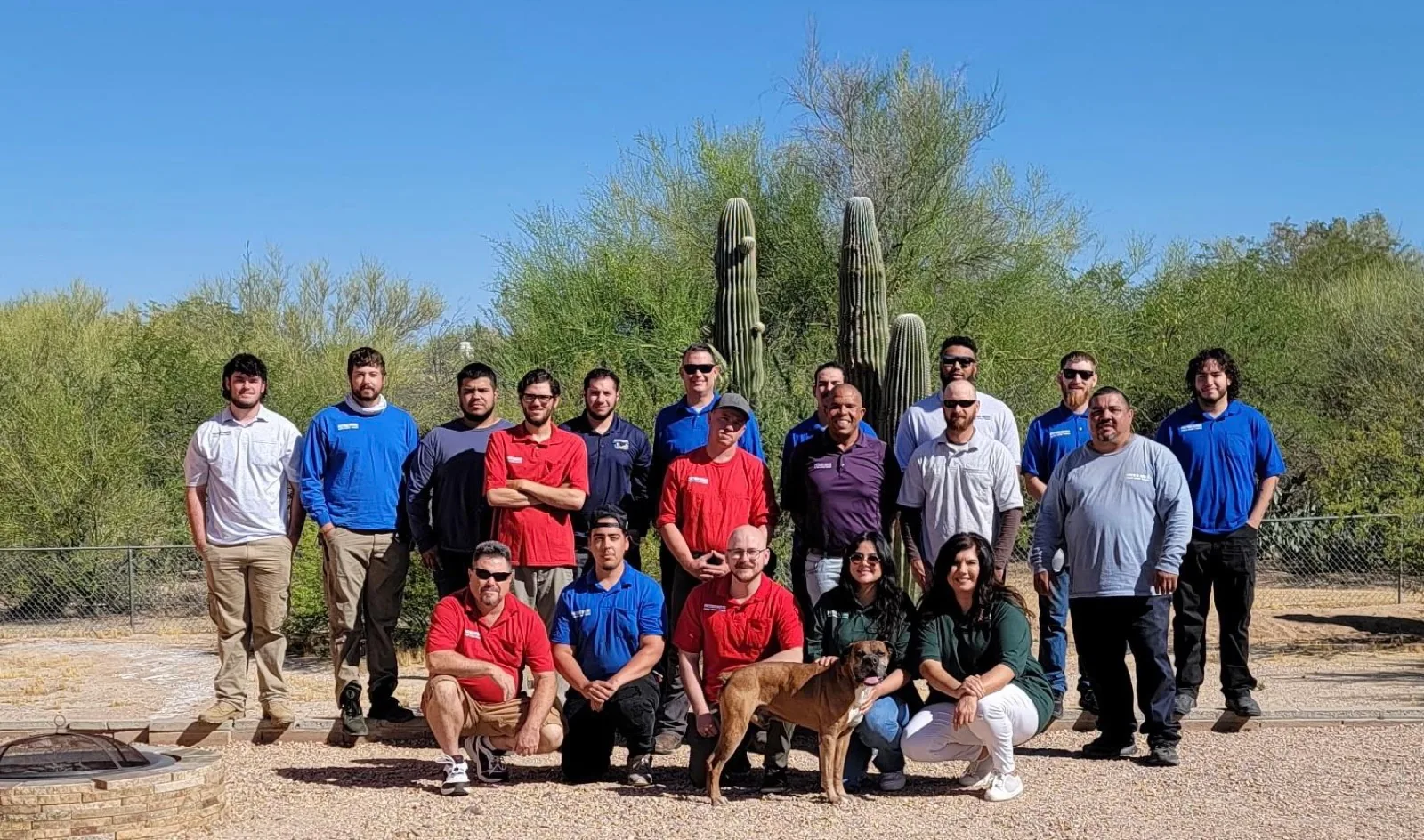
The Picture Rocks Cooling team in the Sonoran desert